
With all the evasions, one assertion made by the Pune (Rural) police stood out: They had found no connection of the Elgar Parishad with the violent incidents of January 1, 2018. Yet, the case against the 'Bhima Koregaon 16', which is based on exactly this alleged connection, continues, and seven of the accused continue to be behind bars under the UAPA, explains Jyoti Punwani.
If an extension is granted, the Commission's next hearing will be a long one: From October 16-28, so as to complete the cross-examination of all remaining witnesses.

'This shows how casually these officials approached a dispute simmering for years which finally erupted into violence.'
=The video also confirms what initial investigations by the media into the Bhima Koregaon violence had found -- that it was a fallout of a Dalit-Maratha dispute in Vudu Budruk village.
'Not giving the Commission space in Mumbai is an insult to Maharashtra's Dalits who are waiting for the inquiry report.'
The Mahars have a historical connection with this victory pillar.

Last month, ink was thrown at Patil during an event in Pimpri town of Pune district in an apparent protest against his controversial remark about Dr B R Ambedkar and social reformer Mahatma Jyotiba Phule.
Shivaji Pawar made a startling revelation: Though the subject matter of his investigation was the January 1 violence, he had not examined any of the witnesses to that violence.
This senior cop who deposed in such detail about the Elgar Parishad, however, claimed to know nothing about the opposition to it from organisations such as Milind Ekbote's Samastha Hindu Aghadi as well as Pune's then Mayor Mukta Tilak.
'The moment they fall foul of the party in power, they become unsafe. Then nobody can guarantee their safety.'

Maharashtra Deputy Chief Minister Ajit Pawar announced that his party, the NCP, is in discussions with the Shiv Sena regarding seat sharing for the upcoming Pune and Pimpri-Chinchwad civic polls. This comes as alliances blur in the state-level elections.
Bhima Koregaon represents what the government can do in India against well meaning people who speak up against atrocities, who stand up for the weak and the dispossessed and for this reason alone as seen as enemies of the State and kept in prison for as long as the government can manage. So long as the rest of us do not speak up against this misbehaviour by the State, so long as we forget about those who have been made its victims, this behaviour will continue, asserts Aakar Patel.

'We have been fighting to treat political prisoners differently.' 'Except for Hyderabad and Kolkata, the concept of keeping political prisoners separate doesn't exist in India.'
'Whenever Dalits have agitated on the streets, the government has blamed Naxalites.'
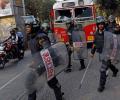
The protesters blocked roads in several areas of Mumbai, forced shops to shut down.
